Train at the Right Time, Show Up Differently Every Time

Most people obsess over the what of their training. The program, the splits, the pre-workout stack, the shoes. What almost nobody talks about is the when — and yet the timing of your sessions might be doing more quiet work on your confidence, your appearance, and your overall presence than any single variable you're currently tracking.
This isn't just about peak athletic output, either. It's about the compound effect that happens when you stack smart timing on top of consistent effort. Train at the right time for your biology and your social environment, and you don't just perform better — you start showing up differently. In the gym, sure. But also at work, on dates, in rooms where people form first impressions in under three seconds.
Let's break it down.
Your Body Has an Opinion About When You Lift
Circadian rhythms are real, and they don't care about your schedule. Your core body temperature, hormone levels, and neuromuscular coordination all follow predictable daily patterns — and those patterns have a direct impact on how a training session actually feels and what it produces.
Research consistently shows that muscle strength and power output tend to peak in the late afternoon, roughly between 2 PM and 6 PM for most people. By that point in the day, your body temperature has climbed, your reaction time is sharper, your joints are more lubricated, and testosterone levels have settled into a favorable window. Translation: if you're chasing raw performance, heavy PRs, or maximum hypertrophy stimulus, the afternoon has a biological edge.
But here's where it gets interesting. Afternoon training doesn't automatically win. It wins on paper, under controlled conditions. Real life is messier — and real confidence is built in messier ways.
What Morning Training Actually Builds
There's a reason the "5 AM club" has become almost a cultural archetype in American fitness culture. It's not just about avoiding crowds or freeing up your evening. Morning training builds something that afternoon sessions, for all their physiological advantages, often can't replicate: psychological ownership of the day.
When you train before the world demands anything from you, you've already done something hard. You've already won a small negotiation with yourself — the one where your bed tried to make a compelling argument and lost. That early-morning win doesn't stay in the gym. It follows you into your commute, your first meeting, your lunch conversation. There's a quiet authority that comes with having already put in work while most people were still hitting snooze.
From a hormonal standpoint, morning workouts also interact with your natural cortisol peak, which hits around 8 AM. Cortisol gets a bad rap, but in the right doses at the right time, it's a performance enhancer — heightening alertness and mobilizing energy. Pairing a workout with that natural spike can make early sessions feel surprisingly sharp, even without a heavy pre-workout.
The confidence payoff here is less about measurable strength gains and more about identity reinforcement. You're not just someone who works out. You're someone who works out first.
The Peak-Hour Paradox
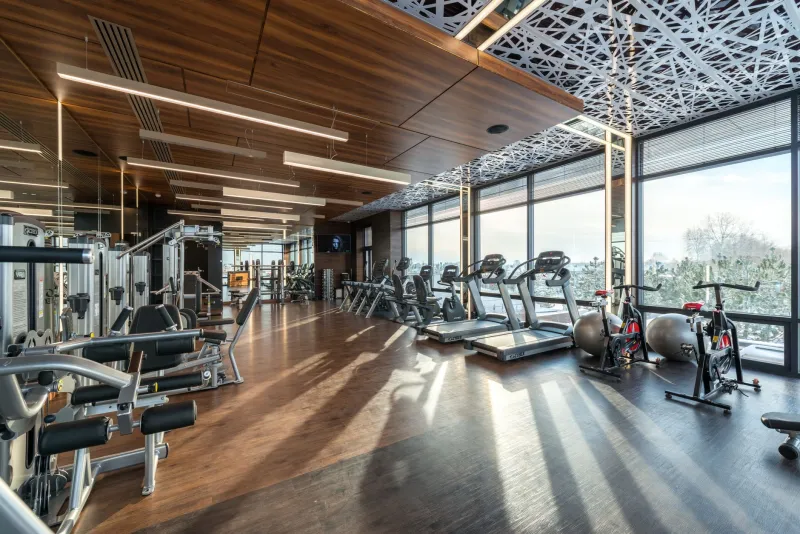
Walk into most commercial gyms between 5:30 and 7:30 PM on a weekday and you'll understand the phrase "peak hours" immediately. Every squat rack is occupied, the cardio floor looks like a sold-out concert, and the energy in the room is genuinely electric — but chaotic.
Here's the paradox: that energy can work for you or against you, depending on where you are mentally.
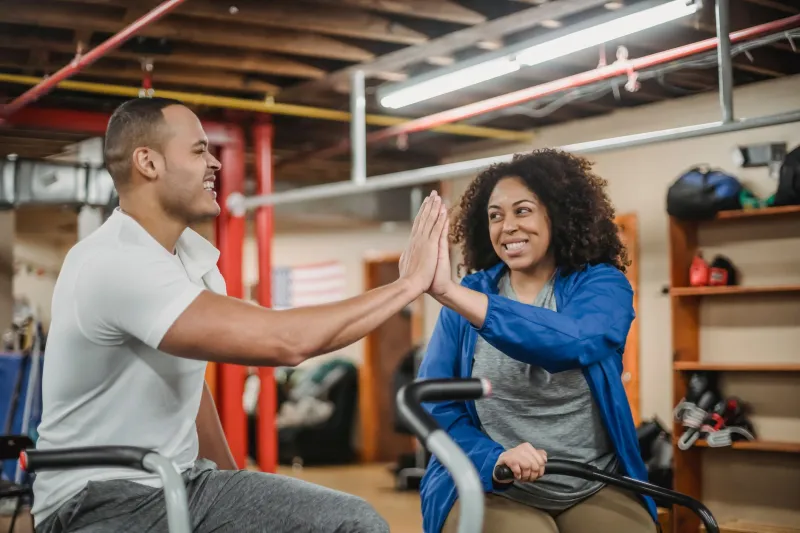
For people who are already confident and established in their training, peak hours can be fuel. The social density creates a mild performance-enhancing pressure. You lift a little heavier when others are around. You push a little harder on the final set. Social facilitation — the well-documented tendency to perform better in the presence of others — is a real phenomenon, and the gym is one of the most consistent places it shows up.
But for people still building their foundation, peak hours can quietly erode confidence. Waiting for equipment kills momentum. Feeling watched before you feel competent creates anxiety rather than ambition. If you're in that earlier stage of your fitness journey, training during off-peak windows — mid-morning, early afternoon, or even late evening — can be a genuinely strategic move. You get the space to move without an audience, develop technique without self-consciousness, and build the internal confidence that eventually makes peak hours feel like home rather than a test.
Timing, Appearance, and the Compound Effect
Here's where gym timing starts to connect to something StyleGyms cares about deeply: how you actually look and feel beyond the workout itself.
Post-workout appearance isn't just about the pump. It's about hormonal state, hydration, skin flush, and the way you carry your body when you've just done something physically demanding. And those factors shift depending on when you train.
Morning training often means you're heading into the rest of your day fresh off a workout — elevated mood from endorphins, better posture from activated muscles, and that particular kind of quiet energy that reads as confidence to people around you. You're not performing confidence. You've just earned it ninety minutes ago.
Evening training, on the other hand, offers its own aesthetic advantage. You've had all day to eat, hydrate, and warm up naturally. Your muscles are fuller, your coordination is sharper, and the post-workout window often lands right before a social situation — dinner, drinks, a casual hangout — where you show up looking your physical best. There's a reason so many people report feeling most attractive right after an evening session. The timing isn't incidental.
Finding Your Timing Identity
The honest answer to "when should I train" is the same as the honest answer to most fitness questions: it depends — but not randomly.
Start with what's actually sustainable. The best training window is the one you'll consistently show up to for the next twelve months, not the one that's theoretically optimal. Consistency will always outperform perfect timing executed sporadically.
From there, layer in intention. Are you training to build mental toughness and daily discipline? Morning has an edge. Are you chasing peak performance and maximum physical output? Late afternoon is your window. Are you using the gym as a social environment to build connections and accountability? Peak evening hours might be worth the crowded squat rack.
And if you can, experiment. Run a four-week block of morning sessions, track not just your lifts but your mood, your energy at work, your confidence in social settings. Then run four weeks of evening training and measure the same things. Your data will tell you more than any general recommendation.
The Bigger Picture
Strategic gym timing is one of those small decisions that compounds quietly over months. It won't transform your physique in a week, but it will shape your relationship with training, your hormonal environment, your social confidence, and ultimately the version of yourself that walks into rooms and takes up space in the right way.
At StyleGyms, we talk a lot about training hard and looking good — but the deeper thing we're always pointing at is living well. And living well means understanding that the details matter. Not obsessing over them. Just understanding them.
The clock in your gym isn't just tracking your rest periods. It might be the most underutilized tool in your whole routine.