Why the Gym You Pick Might Matter More Than the Program You Follow
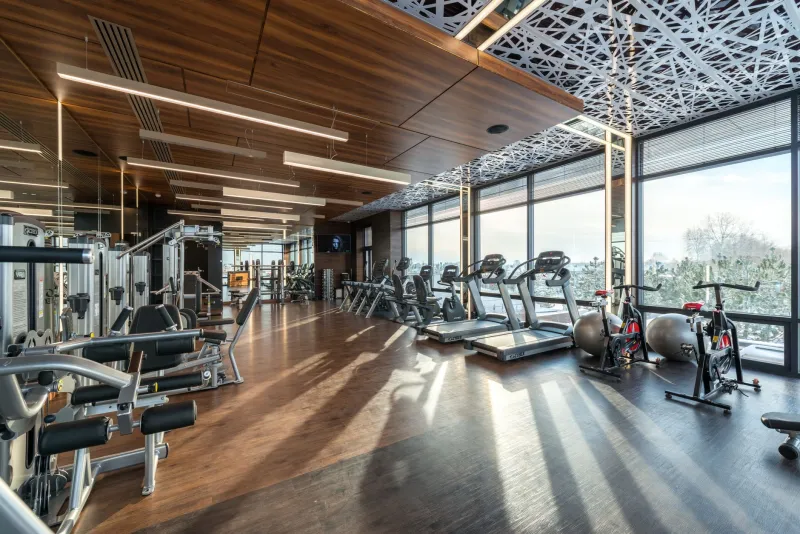
You've dialed in your split. You've got the right shoes. Your playlist is locked and loaded. But three weeks into the new program, something feels off. You're dragging through sessions, skipping days, and leaving earlier than you planned. The easy answer is willpower. The real answer might be the building you're working out in.
Environmental psychology — the study of how physical spaces shape human behavior — has been quietly influencing retail stores, offices, and hospitals for decades. Gyms, somehow, haven't gotten the memo. Most people pick a facility based on proximity, price, or equipment list. Almost nobody asks: does this space make me want to perform?
That question matters more than you'd think.
The Invisible Architecture of Effort
Every gym has what researchers call a behavioral architecture — the way its physical layout nudges people toward certain actions and away from others. Wide-open floor plans with clear sightlines tend to encourage movement and exploration. Cramped, cluttered spaces trigger low-grade stress responses that eat into your focus before your warmup is even done.
Think about the gyms you've walked into that just felt right. Chances are they had good flow — a natural path from the entrance to the locker room to the training floor that didn't require you to squeeze past six people or figure out where anything was. That ease isn't accidental. It's design doing psychological work on your behalf.
Conversely, gyms that feel chaotic or maze-like create what psychologists call decision fatigue at the door. By the time you've navigated the layout and found the squat rack, you've already burned a small but real amount of mental energy. Over time, that friction adds up — and it shows up as missed sessions.
Light Changes Everything (Seriously)
Lighting is one of the most underrated factors in gym performance, and most people never think about it until they're stuck under a bank of flickering fluorescents that make everyone look slightly ill.
Cool, bright light — think blue-white tones in the 5000–6500 Kelvin range — promotes alertness and has been linked to higher perceived energy and faster reaction times. It's why well-designed training floors in serious facilities often feel almost clinical in their brightness. That's intentional. You're being cued to be awake and ready.
Warmer, dimmer lighting does the opposite. It signals rest and recovery, which is great for a yoga studio or a sauna lounge, but genuinely counterproductive on a lifting floor. If your gym bathes its free weight section in the same amber glow as a cozy restaurant, your nervous system is getting mixed messages — and your output will reflect that.
Natural light is in a category of its own. Gyms with serious window exposure or skylights tend to generate stronger member retention, likely because sunlight triggers serotonin release and helps regulate circadian rhythms. If you're training in the morning, a gym with east-facing windows isn't just a nice perk — it's a performance tool.
Mirror Placement: Confidence Booster or Anxiety Trap?
The mirror debate in fitness spaces is more nuanced than it looks. Conventional wisdom says mirrors are motivating — you can watch your form, track your physique, stay engaged. And for a lot of people, that's true. Seeing yourself move well creates a real-time feedback loop that reinforces technique and builds confidence.
But research out of the University of British Columbia found something interesting: for people who are newer to training or who already carry body image concerns, exercising in front of mirrors can actually reduce enjoyment and increase anxiety. The self-monitoring effect cuts both ways. When you're feeling strong, mirrors amplify that. When you're feeling insecure, they amplify that too.
The best-designed gyms account for this by varying mirror placement across zones. Heavy lifting areas and functional training spaces tend to benefit from mirrors. Cardio floors and group class studios? Sometimes less is more. When you're touring a new gym, pay attention to how the mirrors make you feel — not just whether they exist.
Locker Room Culture Is a Real Thing
The locker room gets overlooked in almost every gym evaluation, but it's where a significant chunk of your mental preparation and post-workout processing actually happens. A well-maintained, spacious locker room signals that the facility respects your time and your experience beyond the training floor. A grimy, cramped one signals the opposite — and that signal sticks.
Beyond cleanliness, there's the social dimension. Locker rooms have their own micro-cultures. In some gyms, they're quiet, transactional spaces where people get in and get out. In others, they're genuine community hubs where regulars connect, share tips, and build the kind of accountability relationships that keep you showing up. Neither is objectively better — it depends entirely on what you need from your gym experience.
If community and social accountability are part of what drives your consistency, a locker room that fosters connection is worth actively seeking out. If you're an introvert who needs to decompress post-session without a lot of social noise, a quieter facility might protect your recovery better than you'd expect.
What to Actually Look for on a Gym Tour
Most people on a gym tour are scanning for equipment. Here's what to pay attention to instead — or in addition.
Traffic flow. Walk the path you'd actually take from the entrance to your main training zone. Does it feel natural? Are there obvious bottlenecks? A gym that flows well on a Tuesday afternoon might be a nightmare on a Monday at 6 PM.
Lighting zones. Notice whether the lighting changes between areas. A gym that uses the same lighting everywhere is missing an opportunity — and probably not paying close attention to the details that matter.
Noise environment. Sound design is legitimate. Is the music energizing without being overwhelming? Can you hear yourself think? Gyms that blast music at concert-level volumes are making a choice that works for some people and actively harms the focus of others.
The vibe at the edges. The main floor is always going to look its best during a tour. Check the bathrooms, the stretching area, the corners near the water fountains. How a gym maintains its least-trafficked spaces tells you a lot about its standards overall.
How you feel walking out. This one sounds soft, but it's the most reliable signal. After your tour, sit in your car for thirty seconds and check in. Do you feel energized and ready to train? Or vaguely drained? Your nervous system picked up on things your conscious mind didn't catalog. Trust it.
The Bottom Line
Your training program is important. Your nutrition is important. Your sleep is important. But the environment where you actually do the work is the container that holds all of it — and a leaky container undermines everything you pour into it.
Choosing a gym based on how its physical design interacts with your psychology isn't overthinking it. It's exactly the kind of intentional decision that separates people who train consistently for years from people who cycle through memberships every January. The right space doesn't make the work easy. But it stops the space itself from making the work harder.